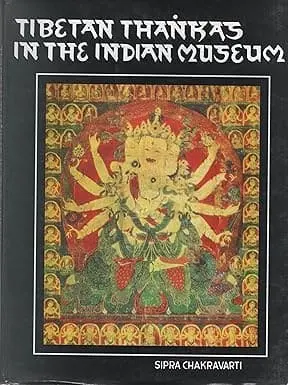
Description
Whether as a textile art or as a piece of painting. Tibetan thanka has a mixed appeal of awe, wonder and admiration. The world of thankas provides various information, ritualistic, social, historical, iconographic, philosophic and even astrological beliefs of the people of Tibet. These temple banners also combine in them different art traditions, both indigenous and foreign This colourful and chequered story of the Tibetan textile art attracted me when I was studying the collection of thankas in the museums of Leiden, Amsterdam, Paris and London in 1969. Mere interest in the subject turned to be a joyous responsibility when a new Tibetan Thanka Gallery was set up by me at the Indian Museum in the year 1974 A descriptive catalogue of the exhibits is, therefore, a desideratum and logical outcome of this sustained endeavour.
Indian Museum, Calcutta, possesses a moderately large collection of painted scrolls, to wit, about 150 odds produced in Tibet and Nepal, the bulk of which is preserved in the Art Section and the rest in the Archaeology Section, all collected between 1912 and 1974. These thankas depict gods and goddesses of Buddhist and Brahmanical pantheons, preachers of Buddhist faith and historical personages. A few specimens contain inscriptions as well. Of somewhat peculiar interest are those few thankas which may be classified as astrological thankas, the fortune-telling thankas played on with dice as a sort of game. A thanka that depicts the Kalacakra’s story, a scene of battle between Buddhist King and the Muslims, is an uncommon specimen. The very large thanka having a size of 645 cm x 430 cm with the painting of Yama and Yami done in applique technique deserves special mention. Twenty-five of these thankas as displayed in the gallery are elaborately dealt with in this catalogue. Besides, a collection of ninety-two thankas in the Reserve of the Art Section has been eventually classified with identification of figures depicted therein as well as other relevant museological data. They range in date from 15th to 19th century A.D. Since Tibetan thankas are mainly undated and anonymous, the dates suggested here are tentative.
Explore more from our collection.


Reviews
There are no reviews yet.