Description
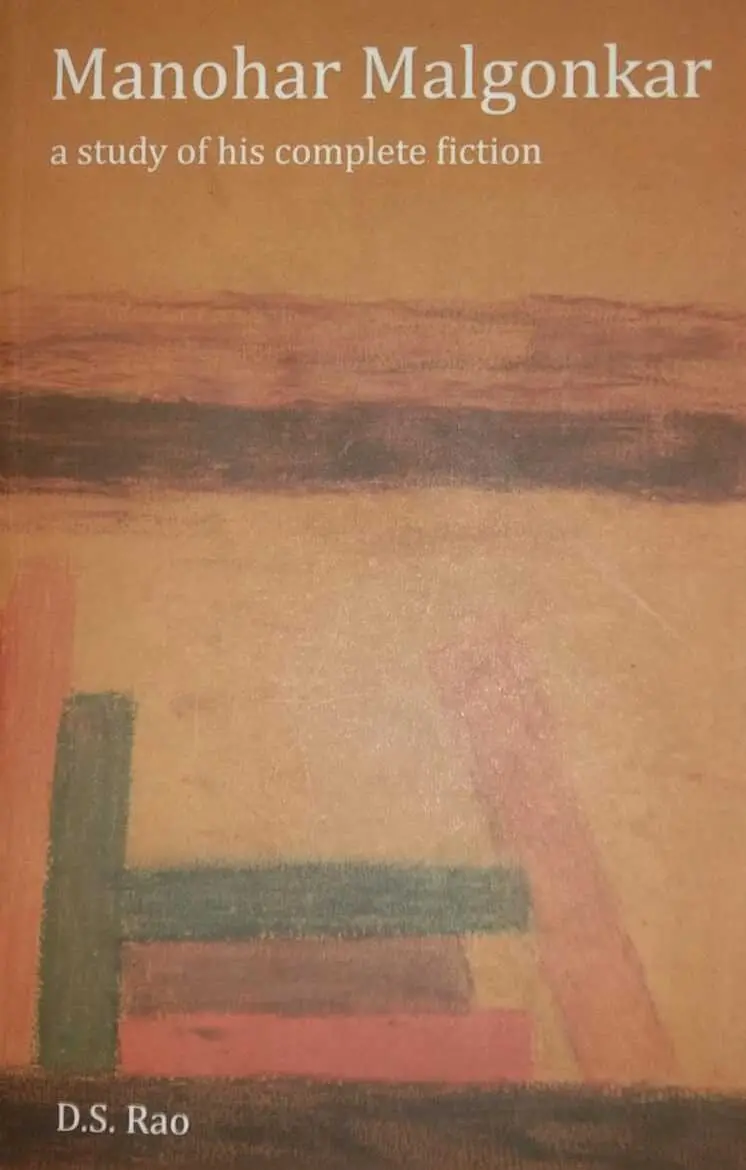
D.S. Rao, Manohar Malgonkar: a study of his complete fiction (VPA Books, 2013)Let’s start with a quiz. Complete this sentence: Oh gosh, sir; I think the thing I would most like to do in all the world right now is to …’Manohar Malgonkar was one of the novelists regularly celebrated in the early days by Commonwealth Literature scholars, usually because his novel The Princes could be compared with Mulk Raj Anand’s The Private Life of an Indian Prince, or his A Bend in the Ganges could be included in studies of fictional treatments of the Indian independence struggle and of Gandhi in particular. Most of the critical work on him dates from the mid-1970s, runs for a decade and then tapers off. This is partly because the novelist, as a former military man and big game hunter, presented an often unfavourable position towards Indian politicians in his books, and because he chose to write in English, but also because as Indian writing in English became acceptable in university studies his admittedly commercial impulse and popular genre fiction (adventure, romance, espionage, war) came to seem jejune by comparison with more literary stylists. With Indian English fiction now an established field, both commercially and as a focus for scholarship, and with new editions of Malgonkar’s work coming out from Rupa and Indiaink/Roli, it is time that a new book should appear assessing the oeuvre of someone R.K. Narayan declared to be one of his favourite writers.What we have is a well-written study in the old style of ‘descriptive appreciation’. In fact, the author – a senior figure in India’s Sahitya Akademi – wrote most of the book in the 1980s, later updating it and incorporating some feedback from Malgonkar himself. Dr Rao provides us with a thorough outline of all the books – nine novels and four collections of stories, not counting nonfiction – appropriately weighing them according to questions of craft (mainly characterisation, plausibility of plot, manipulation of readers’ sympathies, and internal consistency of dating and behaviour). Craft is the appropriate focus in that Malgonkar made no claims to be more than a writer of popular entertainments designed to swell his income.Malgonkar’s credentials as an Indian English novelist stem either from his ability to tell a ripping yarn or from his focus on historical settings. His output in fact covers events in modern India from early 1940s colonial life, through Partition, hostilities with Pakistan, the formation of Bangladesh and Indira Gandhi’s ‘Emergency’. He also writes a novel favourably revaluing Nana Saheb’s role in the ‘Mutiny’ (The Devil’s Wind) and his most critically approved work, A Bend in the Ganges, providing a comprehensive view of disparate political strategies and conflicted personal motives in the Independence movement. Rao does a good job of showing the merits of these books, and productively uses his text-based approach to defend The Princes against V.S. Naipaul’s misuse of some scenes in the novel to denounce the Indian social order by showing the logic and significance of actions according to the characters’ experiences within the novel.As is common in much of the scholarship on Indian English writers, the books are not only discussed from a self-sufficient New Critical viewpoint, but are also cited only from the Indian editions (here mainly Orient paperbacks, many of them undated). This limits what can be said about them. D.S. Rao does point to the regular glossing of Indian words with phrases suggesting a non- Indian readership.
Explore more from our collection.



Reviews
There are no reviews yet.