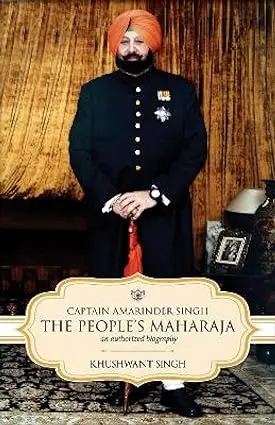
Description
Amarinder Singh, along with his three siblings (including his brother Malvinder Singh, born two years after and crowned Maharaj Kumar), was raised in a secure environment. They were not encouraged to mingle with kids from outside the palace. This was not an attempt to keep the royal children aloof, as that was never the intention of the maharaja and maharani. In fact, this step was rather a compulsion, given the fast changing political circumstances in India. The country was on the verge of being partitioned and communal clashes and riots – with Hindus and Sikhs on one side and the Muslims on the other – had become the order of the day; Patiala was no exception.
The idea of the four children being differently privileged was underscored more by the staff members of the palace rather than by their parents. In fact, they were keen on as normal an upbringing for their children as possible. Sister Welsh, at times by drawing constant comparisons between Heminder and Rupinder and the British princesses, Elizabeth (who later became the queen in 1952) and Margaret, affirmed the girls’ attitude of being different. As for the yuvraj, the staff members were always out to please him and make him feel special since they wanted to curry favour with him in the long run. When the choicest of fruits were about to be served, the attendant would make it a point to offer the first lot to the yuvraj. Amarinder, who was otherwise the shyest and the most reserved amongst the children, did not mind at all the attention bestowed upon him. He latched on quickly to any opportunity to play maharaja, a trait that perhaps has lingered on. This such favouritism by the staff came to an end after Hede Dayal put her foot down and ordered fruit be served first to the child who had performed the best in the day’s classes. Hede Dayal was a tough woman in her own right and brooked no argument. She had escaped from the regime in Germany and reached India. She was not the one to be cowed down by palace politics, marked by intrigues and scheming. She had been hired precisely to keep the children away from such politics and to educate and groom them in a manner that would make them fine human beings, global citizens and open to challenges in the wake of World War II. ‘Absolutely a remarkable character in our lives,’ recalls Amarinder, his tone reflective of the significance of her role in shaping his life and that of his siblings.
Explore more from our collection.



Reviews
There are no reviews yet.