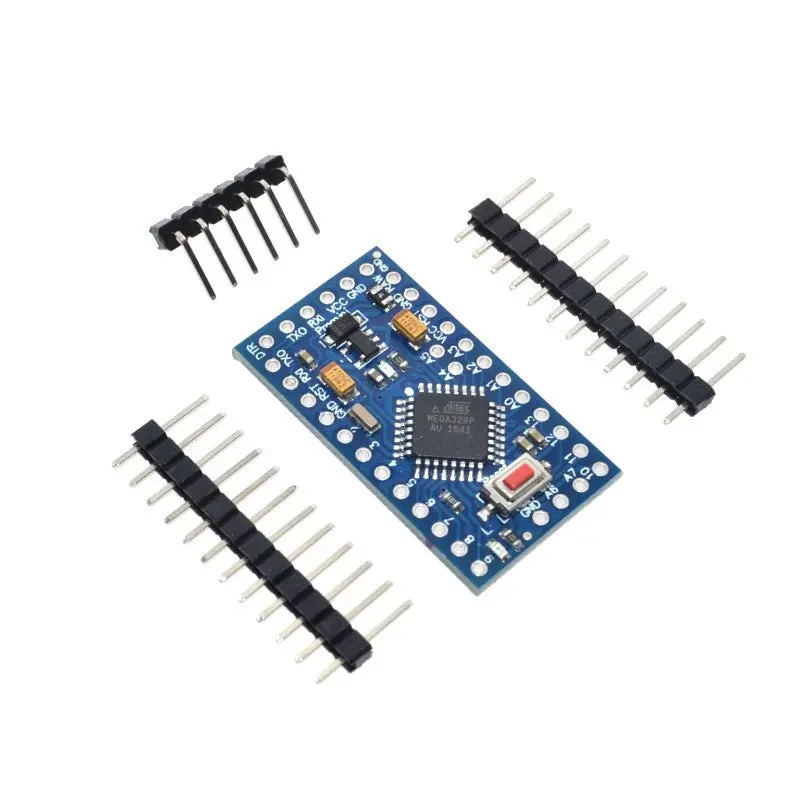
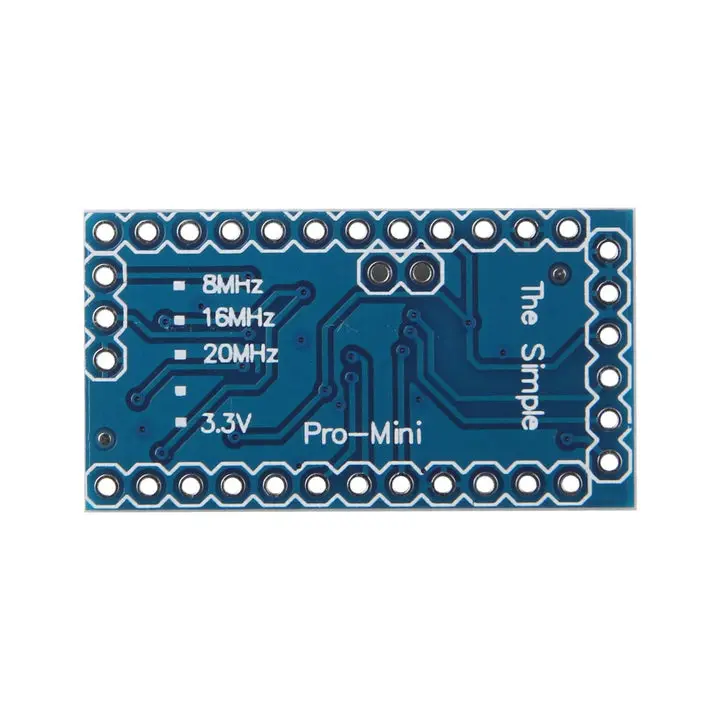
Description
- Microcontroller: ATmega328
- Operating Voltage: 3.3V
- Input Voltage: 3.3V
- Digital I/O Pins: 14 (of which 6 provide PWM output)
- Analog Input Pins: 8
- DC Current Per I/O Pin: 40mA
- Flash Memory: 32KB (of which 2KB is used by the bootloader)
- SRAM: 1KB
- EEPROM: 512bytes
- Clock Speed: 8MHz
ATmega328P Microcontroller: The ATmega328P is a popular 8-bit microcontroller from Atmel. It is the same microcontroller used in many Arduino boards, such as the Arduino Uno. The ATmega328P operates at 3.3V and runs at a clock speed of 8MHz in this version of the Pro Mini. It has 32KB of flash memory, 2KB of SRAM, and 1KB of EEPROM.
Improved Version: The “Improved Version” designation suggests that this board may have enhancements or modifications compared to previous versions of the Pro Mini. These improvements could include better power management, additional features, or updated components.
3.3V Operation: The Pro Mini runs at 3.3V, which is different from the standard Arduino Uno and some other Arduino boards that operate at 5V. This lower voltage is suitable for battery-powered and low-power applications.
8MHz Clock Speed: The clock speed of 8MHz is lower than the 16MHz clock speed commonly found on standard Arduino boards. This reduced clock speed helps save power and is suitable for applications where high processing speed is not required.
Compact Form Factor: The Pro Mini is known for its small and compact form factor, making it suitable for projects with limited space requirements. It is often used in embedded systems and custom-made devices.
GPIO Pins: The board provides a set of GPIO (General Purpose Input/Output) pins, including digital pins, analog pins, and power pins. These pins allow you to connect various sensors, actuators, and other electronic components to the board.
Programming Interface: To program the Pro Mini, you would typically need an external USB-to-Serial converter or FTDI programmer. It does not have an onboard USB connector like some other Arduino boards. The board includes a six-pin programming header for connecting the programmer.
Power Supply: The board can be powered by an external 3.3V power source or through the RAW input pin (which can accept higher voltage and includes an onboard voltage regulator.
Explore more from our collection.

Reviews
There are no reviews yet.